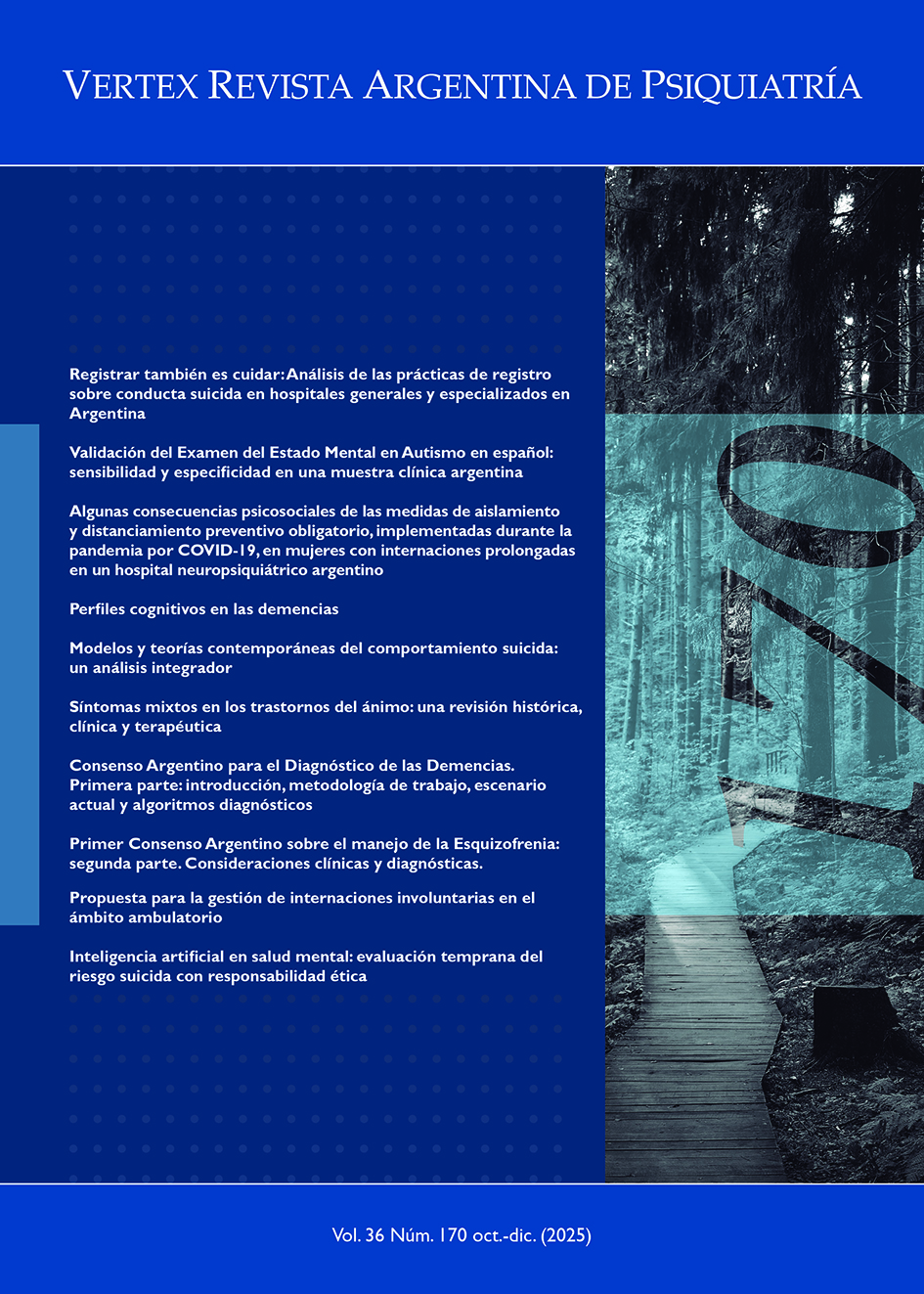
Some psycho-social consequences of compulsory isolation and preventive distancing measures implemented during the COVID-19 pandemic in women with prolonged hospitalisation in an Argentinean neuropsychiatric hospital
DOI:
https://doi.org/10.53680/vertex.v36i170.942Keywords:
pandemic, women, neuropsychiatric hospital, isolationAbstract
Introduction: This research project was initiated in response to a critical issue identified by the team at Esteves Hospital. This issue pertains to the necessity for hospitalised women to narrate their experiences during the pandemic and to examine the potential impact of confinement on outpatient work. The objective of this study is to produce knowledge about the approach to mental health in the context of the Coronavirus Disease 2019 (Covid-19) pandemic from the perspective of hospitalised users. Furthermore, this study aims to make the situation of these women visible in order
to contribute to the reduction of stigma. Methodology: the research employed focus groups comprising eight users, selected intentionally. An informed consent process approved by the ethics committee was conducted. The analysis yiel-ded some convergent meanings. The users highlighted the feeling of confinement during the most restrictive period of the health measures. They were notably distressed by the separation from their roommates and the disruption of their routines. They emphasised the importance of living together in the hospital and how getting to know each other was beneficial for thinking about a possible discharge. We emphasise the importance of situational awareness during the pandemic, particularly in terms of identifying the necessary care. Discussion and conclusions: We conclude on the
significance of the bonds established in the hospital and their relevance in the outpatient project. As a key finding, we highlight the importance of working in small groups for the resolution of coexistence conflicts.
Downloads
Downloads
Published
How to Cite
Issue
Section
License
Copyright (c) 2026 Julieta L. De Battista, Marisel Hartfiel, Natalia Osella, Nadia M. Percovich

This work is licensed under a Creative Commons Attribution-NonCommercial-NoDerivatives 4.0 International License.